


Complaining of pain in the joints, some patients face a diagnosis of "arthrosis", others - "arthritis".When they meet, after exchanging descriptions of their symptoms in a conversation, they suddenly come to the conclusion that there is only one disease, since it appears almost identically in both cases!The question arises: what, then, are the differences between arthritis and arthrosis?Indeed, many people confuse these diseases, but despite the similarity of symptoms, arthritis and arthrosis are different diseases with significant differences in the clinical course.That is, understanding the cause of the disease, the mechanism of its occurrence and development leads to effective therapy.
Arthritis and arthrosis: what they have in common
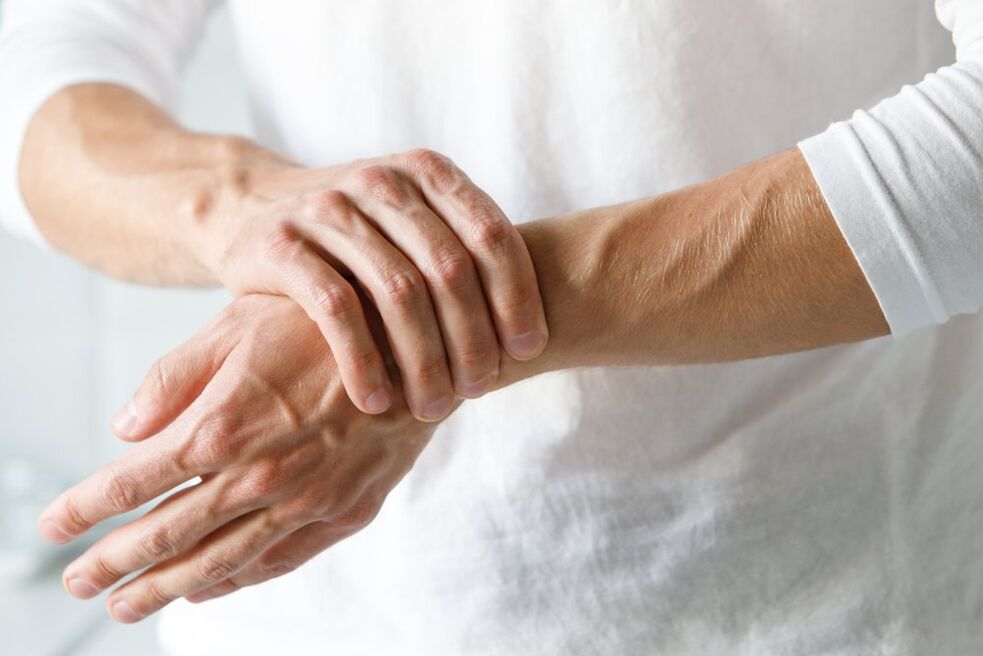
The appearance of arthritis and arthrosis can be caused by a single factor or by a combination of multiple causes.Both diseases can develop under the influence of, for example, injury or diabetes.In both cases, patients experience degenerative-dystrophic changes in the articular cartilage, which lead to severe pain and, in some cases, limited movement.The target of diseases are the joints and periarticular tissues of the body, in particular the knee joint.Patients, sometimes overcoming pain, take care of themselves and without effective therapy all their efforts fail.The patient loses his ability to work and instead acquires a disability.
According to the accepted ICD-10 classification, arthritis and arthrosis are combined in a subgroup "Arthropathy" - disorders that mainly affect peripheral joints (extremities).
Arthritis and arthrosis: the differences
Sometimes it is impossible to accurately determine the cause that started one of these two diseases, but the consequences develop the same: pain and stiffness are felt in the joints, swelling, edema, redness, hyperemia of the skin over the affected area, etc.In reality, only a person without medical education can confuse these two completely different pathologies, but a doctor can easily separate one from the other.
The main difference is that if the direct cause of arthrosis is mechanical damage, excessive or disproportionate load on the articular apparatus, age-related changes, then arthritis appears as an inflammatory process in the joints and periarticular tissues.With arthrosis, the blood count is normal, damage to other organs and systems does not occur.With arthritis, the opposite picture is observed: specific proteins, increased ESR and leukocytes will be detected in the blood.The pathological process involves the heart, kidneys and genitourinary system.
Another difference is that arthrosis mainly affects the knee and hip joints, which carry a large stabilizing load.Arthritis favors the small joints of the hands, feet, wrists and rarely affects the elbow, knee and hip.
What causes osteoarthritis?
Arthrosis is defined by experts as a non-inflammatory joint disease that has a chronic and progressive course.As a result of degenerative-dystrophic changes, the articular cartilage is destroyed.Arthrosis is often accompanied by inflammation of the synovial membrane of joints or ligaments (synovitis), which also contributes by increasing the destruction of articular structures.
It is precisely because of synovitis that in the medical literature in the English language osteoarthritis is called osteoarthritis, using the suffix "-itis" as an indication of the presence of an inflammatory process.Although synovitis is not an integral part of arthrosis, it can occur without it.
It is believed that arthrosis is the fate of old people.Indeed, with age, the risk of joint damage increases continuously, but athletes are also at high risk of suffering from this disease due to excessive physical strain or poor technique, such as strength exercises.In addition, the destruction of the articular-ligamentous apparatus can lead to:
- hereditary predisposition,
- congenital or acquired pathologies of joint development (dysplasia, detachment of bone epiphysis, hypermobility of joints, etc.),
- the presence of metabolic and hormonal disorders such as diabetes mellitus,
- overweight and obesity.
Danish scientists conducted a study of risk factors for primary osteoarthritis of the hip and knee joints.The results revealed that genetic and environmental factors have different effects on the large weight-bearing joints.When it comes to the hip joint, the most significant factors for the development of pathology are genetic (47%) and environmental (22%) components.Meanwhile, for the development of the same pathology in the knee joint, differences in age and gender, especially after 50 years, as well as various environmental factors, are of greatest importance.
Cartilage tissue destruction can also develop as a result of inflammatory diseases of bones and joints (gout, rheumatoid arthritis, etc.).
What is arthritis?

Arthritis is commonly referred to as the whole spectrum of inflammatory joint diseases.If the disease affects one joint, it is monoarthritis;more than one is polyarthritis.Arthritis is distinguished as an independent disease and as a manifestation of other pathologies.In the first case, it is about rheumatoid arthritis, septic, gout.In the second - in connection with psoriatic and reactive arthritis.The inflammatory process in the joint can also be a consequence of hepatitis, Lyme disease (tick-borne borreliosis) or granulomatosis.
Rheumatoid arthritis is an autoimmune disease where a person's immune system mistakenly attacks tissues in their body.In this case, in addition to inflammatory reactions in other organs, inflammation of the synovial membrane of the joints occurs without the penetration of a microbial pathogen into it.This joint swells, pain appears and mobility is impaired.
Another form of arthritis is gout, a systemic disease due to improper metabolism.Excess uric acid settles on the articular surface, causing inflammation.Heredity, hormonal factors (men get sick in most cases) and poor nutrition are of great importance for the development of the disease.Gout is often confused with arthrosis lesions in the big toe area.
The development of some types of arthritis is provoked by the penetration of pathogenic microorganisms into the joint space, most often bacteria.